James Stephens at Bitcoin 2026: Fixing the Quantum Issue at the Wallet Level

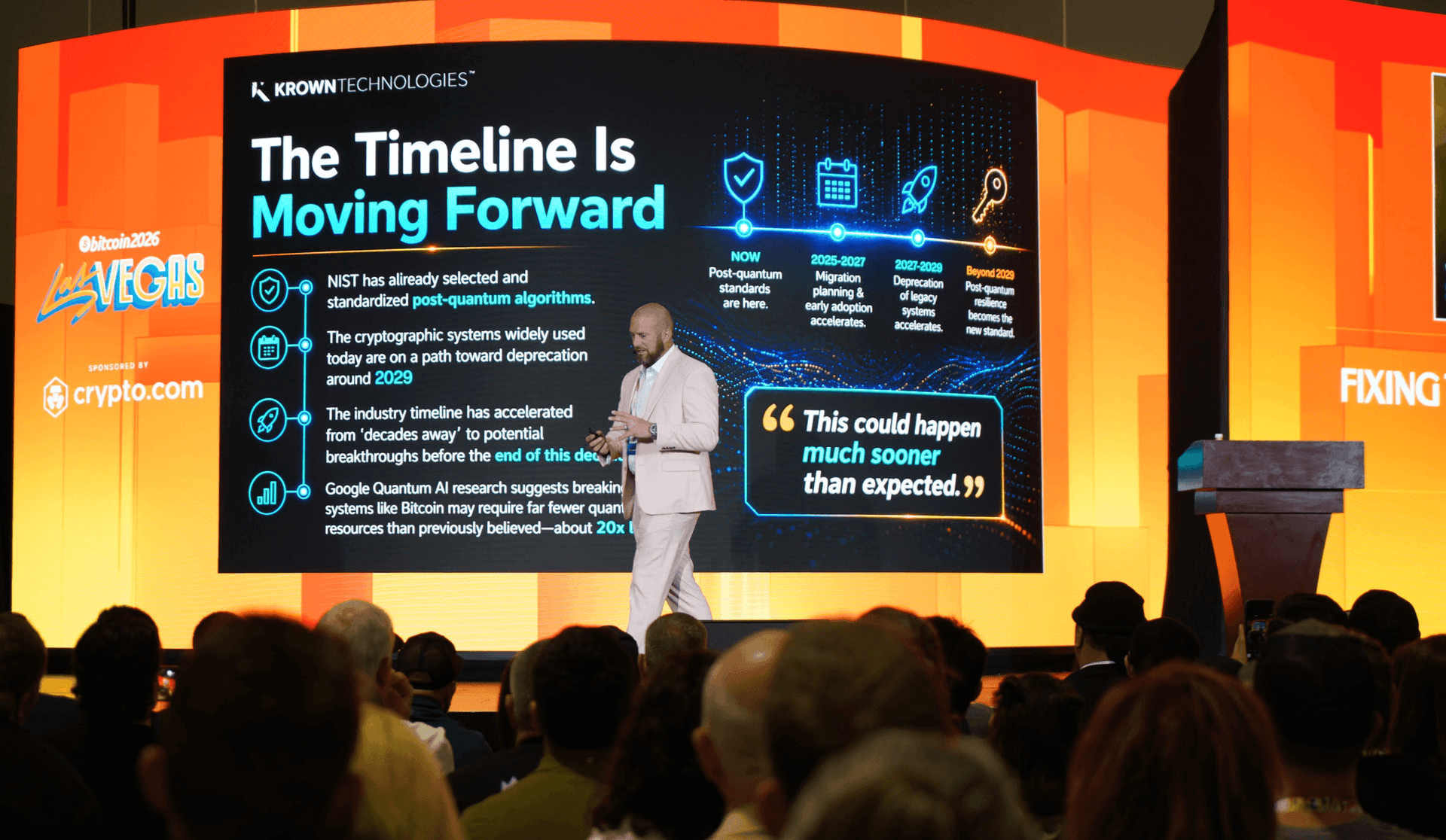
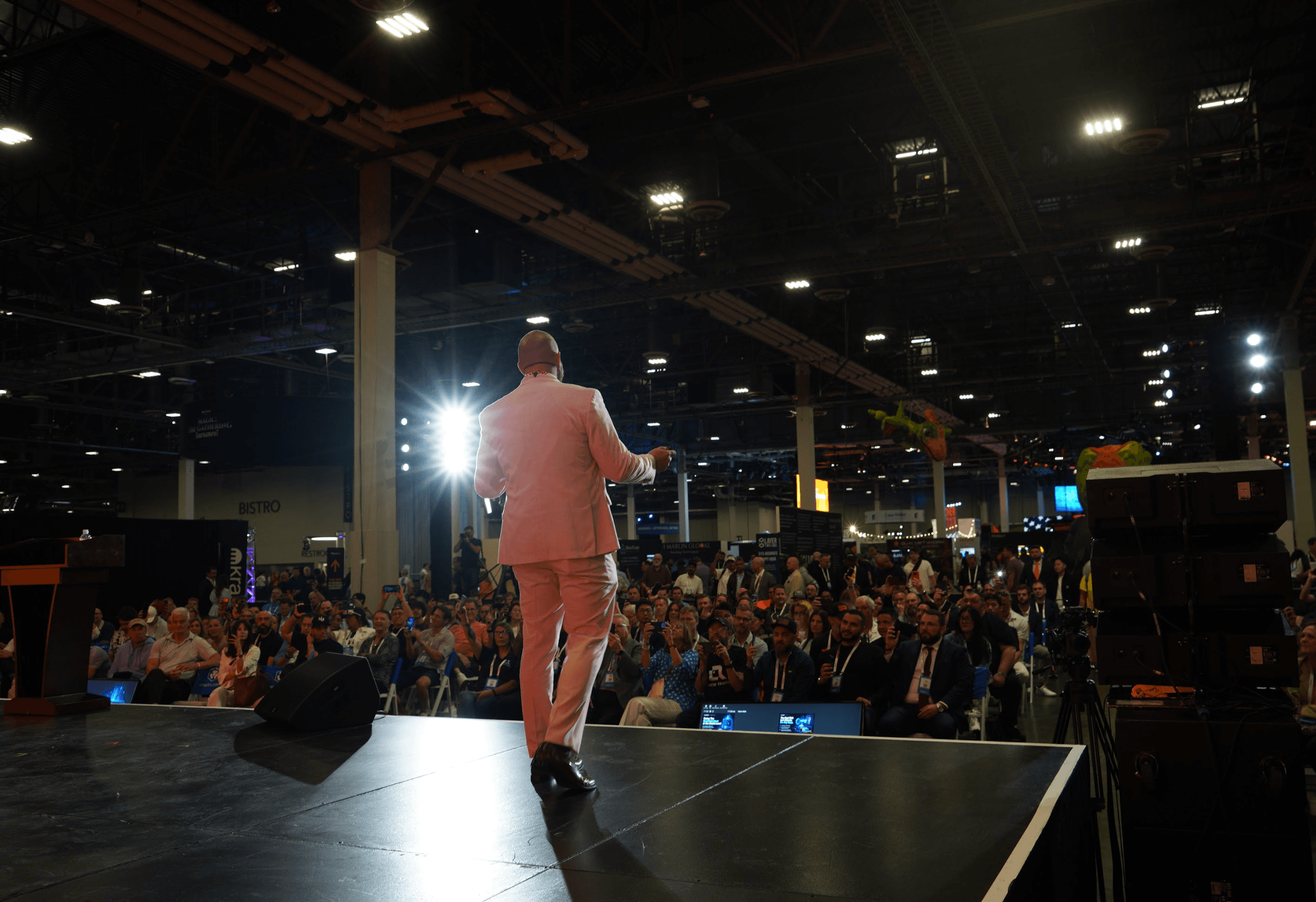
On April 28, 2026, James Stephens CBE CCFI, Founder & CEO of Krown Technologies Inc. and Krown Network, delivered his keynote, “Fixing the Quantum Issue at the Wallet Level,” on the Genesis stage at Bitcoin 2026 in Las Vegas.
The room was full, with standing room only, and James opened with a simple exercise.
He asked the audience to raise their phones.
Then he asked them to keep their hands raised if that device held a wallet, digital assets, financial logins, or access to anything connected to their financial life.
Most hands stayed up.
It was a direct way to make the point. The future of blockchain security is not only about protocols, mining, or network architecture. It is also about the endpoints people carry every day, the wallets they use, the keys they hold, and the systems protecting those keys.
“What you see in this room is not just people. You’re not just seeing phones in the air.”
That moment set the tone for the keynote. James was not speaking about quantum security as an abstract future concept. He was speaking about the user layer, the wallet layer, and the place where digital asset security becomes personal.
Watch the full keynote here.
The Real Risk Is in the Keys
A central message from the keynote was that the industry needs to understand where the risk actually sits.
Bitcoin’s protocol has stood the test of time. But James made the case that the real post-quantum concern begins much closer to the user.
“The real risk of Bitcoin, it’s in the keys.”
James explained that Bitcoin was built on cryptography that has been resilient for years, but it was not originally designed for a post-quantum threat model. As quantum computing research advances, and as standards timelines continue to shift, the risk around exposed public keys and wallet-level security becomes harder to ignore.
This is not the same as saying Bitcoin itself fails at the protocol level. James was clear that the concern he was addressing is different. It is about keys, public-key exposure, signing, storage, and the wallets where users interact with their assets.
“That’s not a network attack. It’s not a mining attack. That’s a wallet-level attack.”
For anyone following the future of self-custody, digital asset security, or quantum-aware infrastructure, this is the section of the keynote worth watching closely.
Q-Day Will Not Arrive With a Countdown
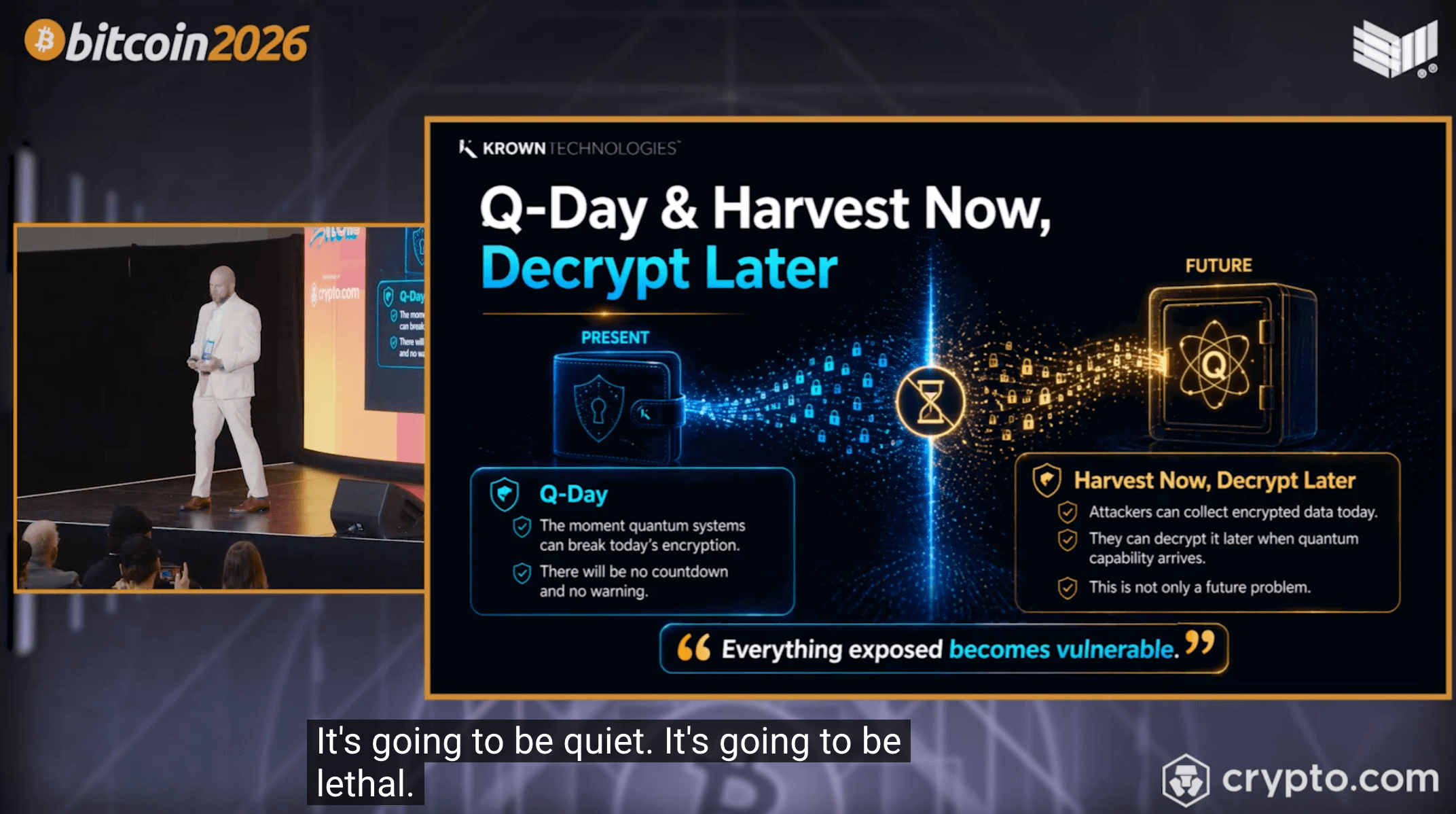
James also spoke about Q-Day, the point at which quantum computers could become powerful enough to challenge widely used cryptographic systems.
The exact timing remains uncertain, and that uncertainty is part of the problem. Quantum timelines have shifted before, and James pointed to the way industry expectations have moved from distant future assumptions toward much closer planning windows.
His message was not that the industry should panic. It was that waiting for perfect certainty is not a serious security strategy.
“Q-Day is not going to come riding in on some type of horse and trumpets.”
The point is simple: when a threat becomes obvious, preparation is already late.
James also discussed harvest-now-decrypt-later risk, where exposed public information can be captured and stored today, with the intention of exploiting it later if quantum capability reaches the necessary level.
That matters in blockchain because public keys, signatures, and transaction history can remain visible long after the original activity took place.
The keynote framed this as one of the reasons wallet-level protection needs to be addressed before pressure arrives.
Why Wallets Are Ground Zero
One of the most important ideas from the keynote was James’ framing of wallets as “ground zero.”
For years, the industry has spent significant energy securing protocols, chains, mining systems, validators, and smart contracts. That work matters. But users do not experience blockchain only at the protocol level.
They experience it through wallets.
Wallets are where keys are generated. Wallets are where signatures happen. Wallets are where assets are stored, moved, and accessed. Wallets are where self-custody becomes real.
“If quantum breaks anything first, the first thing it’ll break is the point where the keys are created, where they’re stored, and where they’re used.”
That line is one of the strongest explanations of why Krown Technologies has focused so heavily on Qastle Wallet.
The wallet is not a side layer. It is the point where users meet the security model.
For James, this means the future of Bitcoin and blockchain security will not be decided only by what happens on-chain. It will also be decided by how well the industry protects keys at the user level.
The Layers of Defense
James then moved into the layers of defense he believes are needed for the post-quantum era.
The first is post-quantum cryptography, or PQC: the move beyond elliptic curve assumptions toward cryptographic frameworks designed with quantum-era threats in mind.
The second is true entropy.
James explained entropy as the randomness involved in generating keys and securing systems. He contrasted pseudo-random number generation with quantum random number generation, arguing that true entropy at the quantum level matters because key security begins at the moment a key is created.
“True entropy strengthens wallet security through the moment that the keys are created.”
This is where Quantum eMotion becomes an important part of the Krown story.
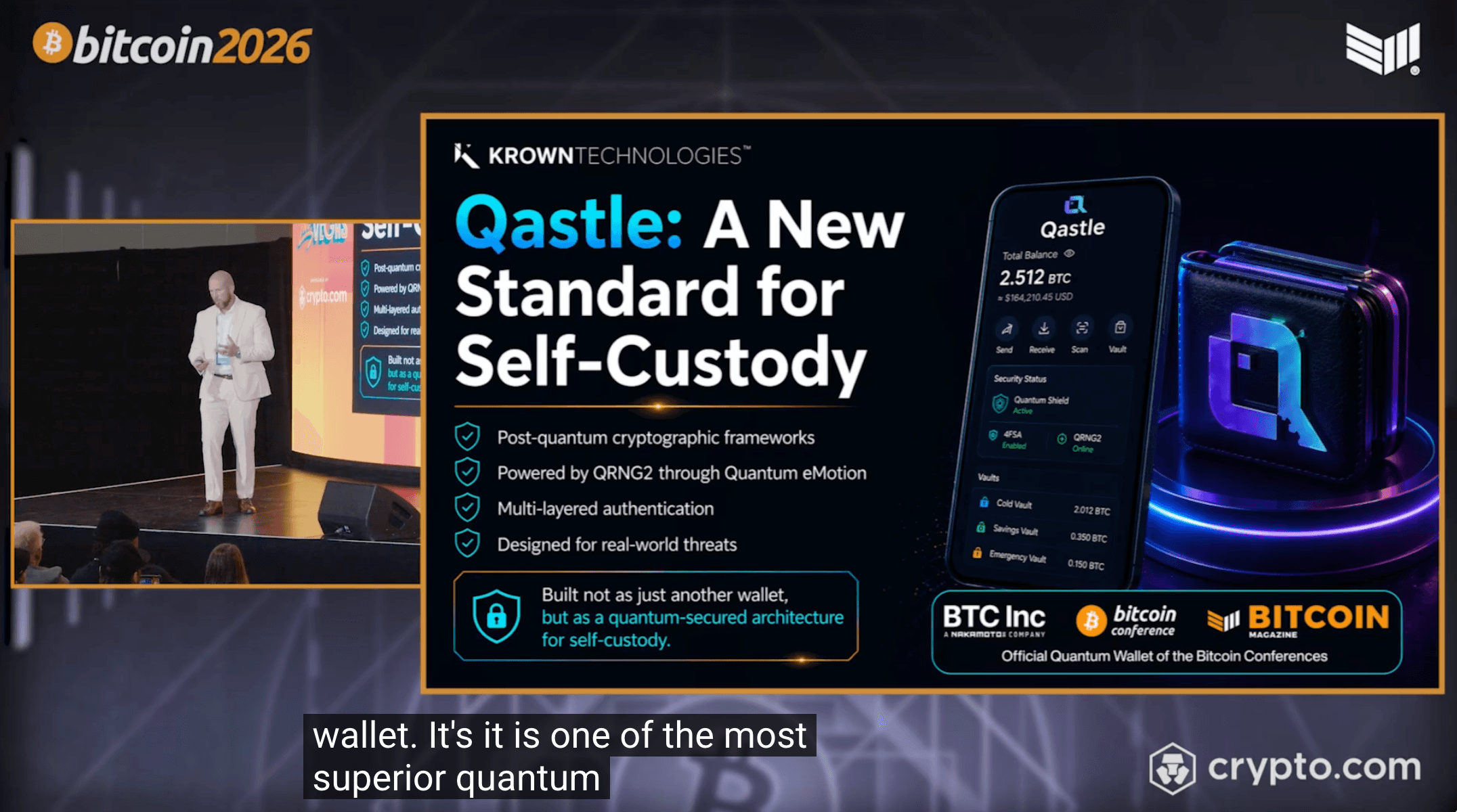
Krown Technologies partnered with Quantum eMotion, led by Dr. Francis Bellido, to integrate quantum random number generation into the security architecture behind Qastle Wallet. James referenced Quantum eMotion’s QRNG2 technology as part of the foundation for creating stronger entropy in Krown’s quantum-aware security approach.
That detail is important because wallet security is not only about what happens after a transaction is signed. It begins much earlier, at the point of key generation and security architecture.
For a deeper look at how James explains PQC, entropy, QRNG, and the wallet-level security model, watch the keynote here.
Why Qastle Wallet Was Built
James made clear that Qastle Wallet was not built because quantum security became a trend.
“We didn’t build it because it was trendy. It was built because we saw where it was going.”
That line matters.
The Krown approach starts with the threat landscape. James explained that the team looked at what was happening now, what attack patterns were emerging, and what future risks needed to be addressed. From there, Qastle Wallet was built from the foundation up.
“What does the threat landscape look like? How can we mitigate the type of attacks that are happening right now and in the future?”
Qastle Wallet is designed around quantum-aware security principles, post-quantum cryptographic frameworks, Quantum eMotion’s QRNG2 technology, multi-layer authentication, and real-world threat mitigation.
The point is not to make wallet security feel more intimidating. The point is to build stronger protection into a wallet experience people can actually use.
That has been a recurring theme across Krown’s wider ecosystem: security needs to be practical. If users cannot understand it, access it, or use it, the industry has not solved the problem.
Qastle Wallet is Krown’s answer to that challenge at the wallet layer.
Sovereignty Needs Security
Near the end of the keynote, James connected the conversation back to Bitcoin’s original promise.
“Bitcoin represents sovereignty. It represents freedom, ownership. But sovereignty without security is just exposure.”
That was one of the strongest lines of the keynote.
Self-custody gives users control. It gives them ownership. It gives them direct responsibility over their assets. But that responsibility also means the tools protecting those assets need to evolve as the threat landscape evolves.
The question is no longer only whether users can hold their own keys.
The question is whether those keys can be protected against what comes next.
That is the heart of the Krown thesis: freedom and ownership need infrastructure strong enough to support them.
Qastle Wallet, Krown Network, KrownDEX, Excalibur, QorTrace, and the wider Krown ecosystem all sit inside that broader direction. Each product speaks to a different part of the same challenge: how to build digital asset infrastructure that is more secure, more usable, and better prepared for the post-quantum era.
Building for the Next Generation of Security
James closed by thanking the Bitcoin Conference team, the Krown Network team, and the engineers, developers, and visionaries helping build across the ecosystem.
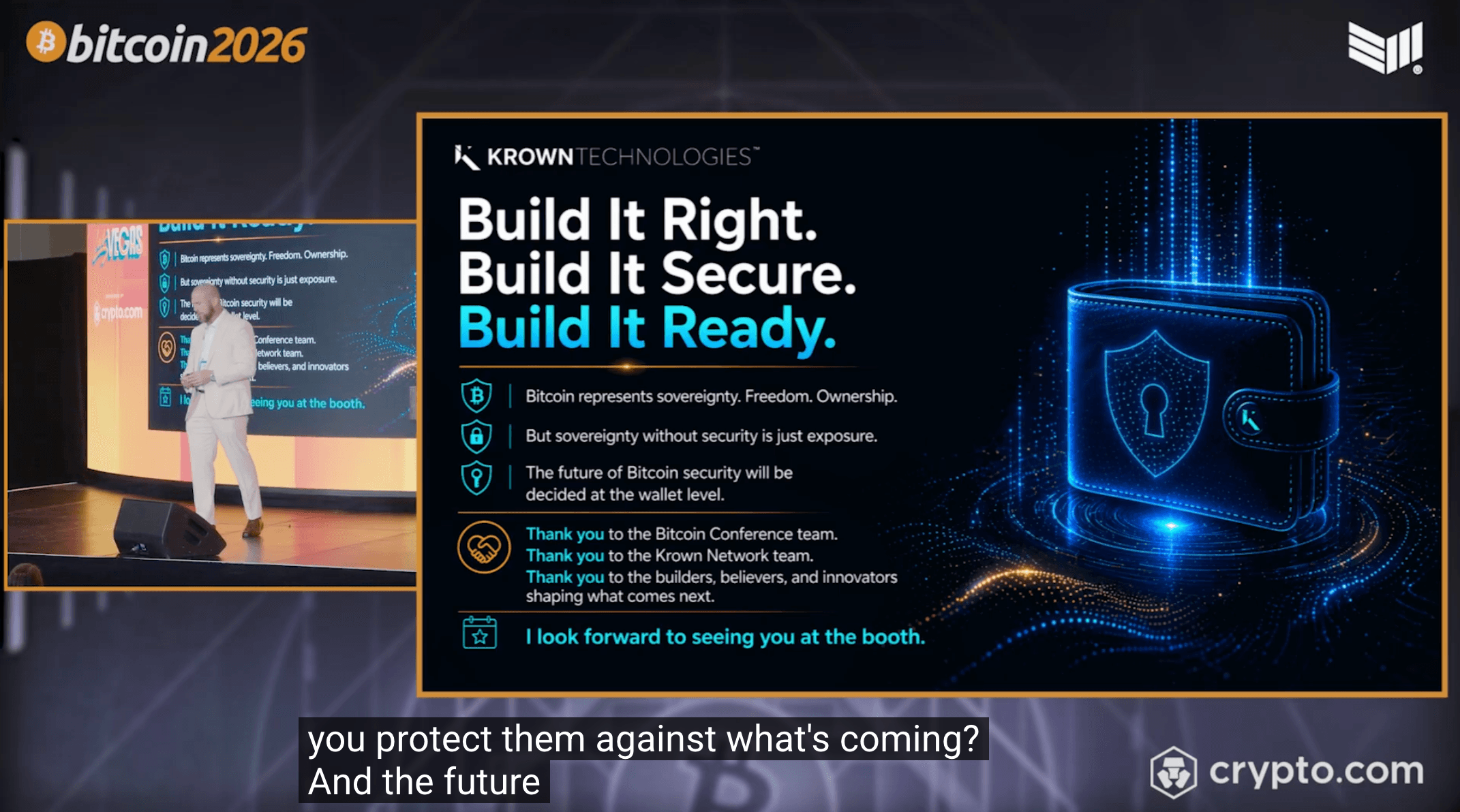
He also made clear that Krown is not simply trying to participate in the future of digital asset security.
“We’re not here just to participate in the future, we’re here to build it.”
That line reflects the wider Krown strategy.
The company is building across multiple layers: wallet security through Qastle Wallet, infrastructure through Krown Network, ecosystem utility through KrownDEX, cold wallet development through Excalibur, post-quantum risk intelligence through QorTrace, and additional products designed to support a larger quantum-aware ecosystem.
James summed up the philosophy simply:
“We build it right, we build it secure, and we build it ready.”
That is the message the keynote left with the room.
As quantum timelines shift, standards evolve, and the industry becomes more aware of wallet-level exposure, the security conversation is moving closer to the user. The device in your hand, the wallet you use, the keys you hold, and the systems protecting them all matter.
For Krown Technologies, fixing the quantum issue starts at the wallet level.
Watch the full keynote:
https://www.youtube.com/watch?v=DwK8L42xFxk
Explore Krown Network:
Learn more about Qastle Wallet:
Follow James Stephens:
Follow Krown Network:

Sign up to the Krown Mailing List
Secure your insider access to demos, builds and betas. Join us.