Jerry Lagace in TheStreet: Why the Quantum Threat to Crypto Starts Before Quantum Computers Arrive

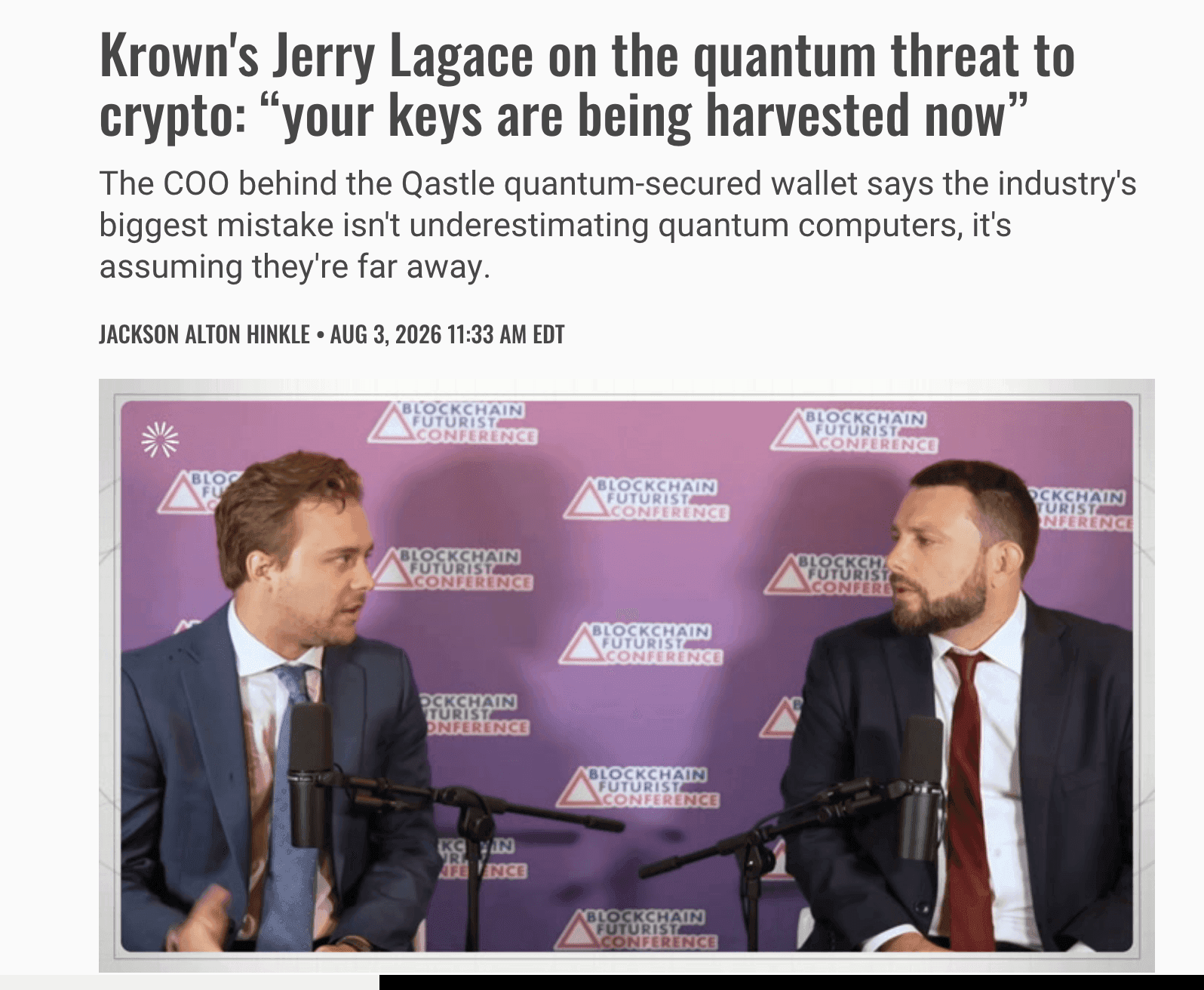
The quantum threat to crypto is no longer a distant talking point.
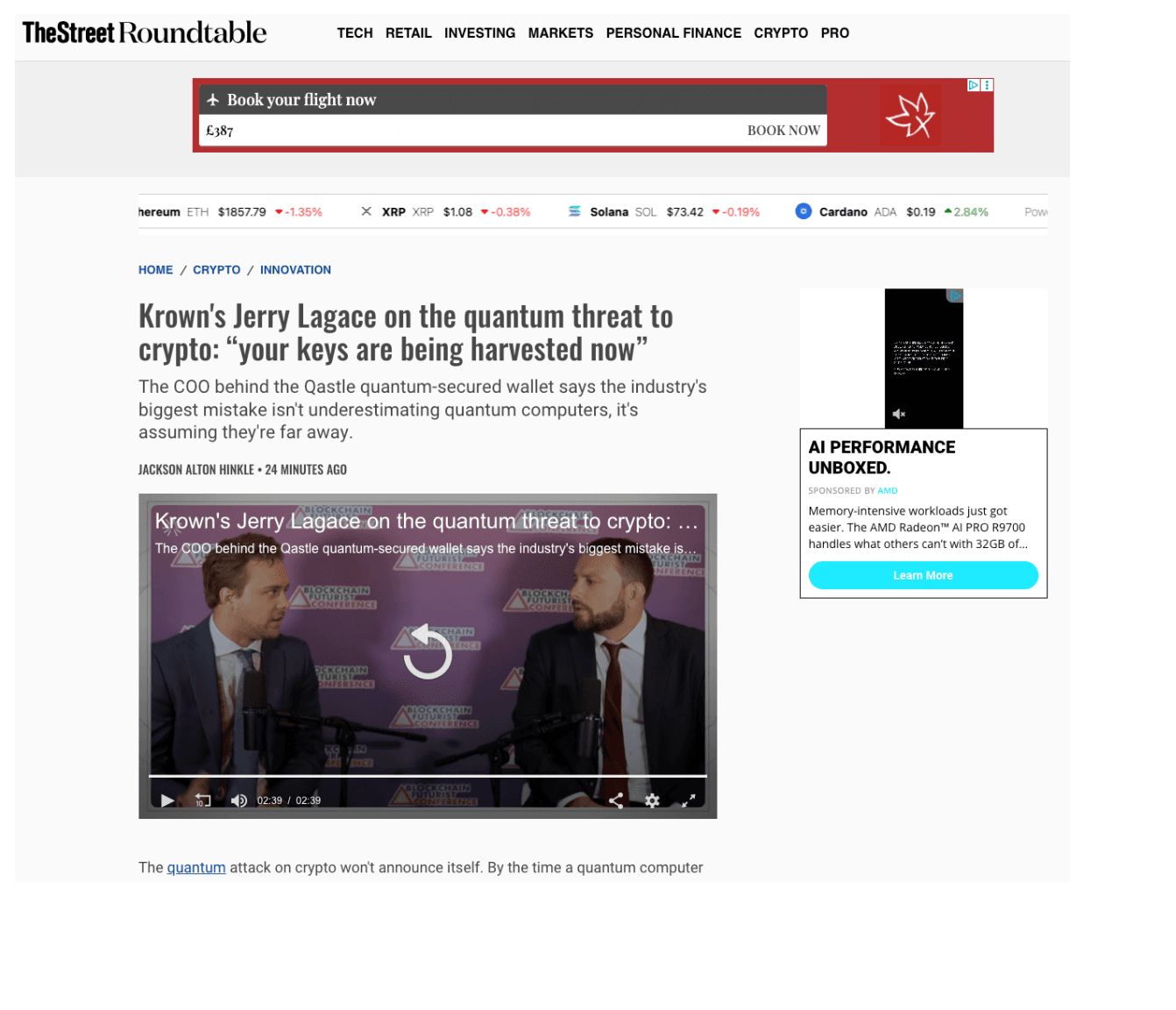
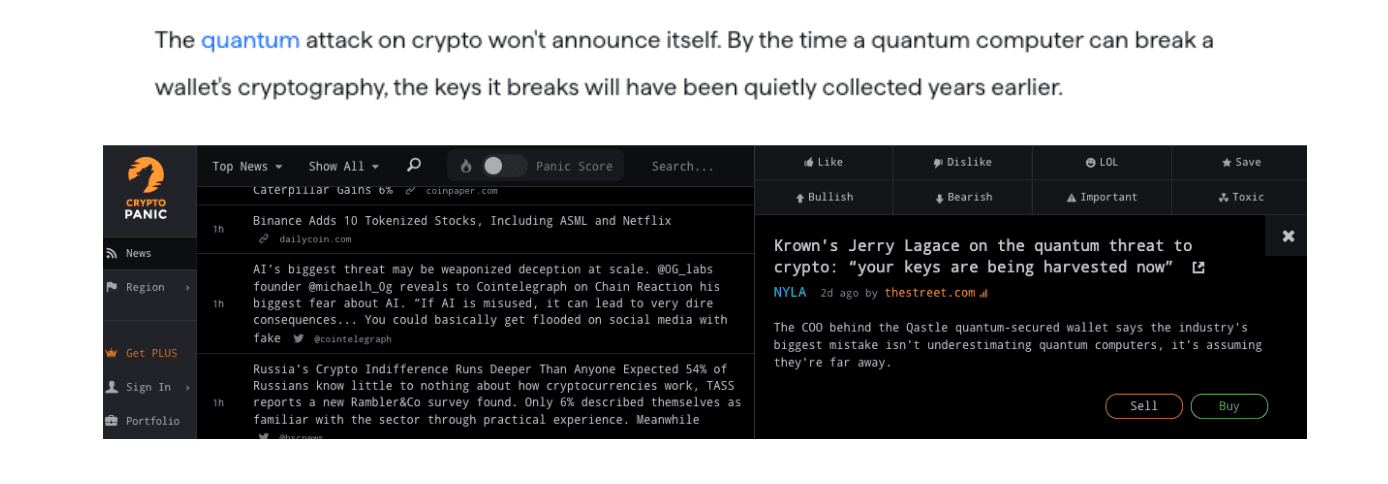
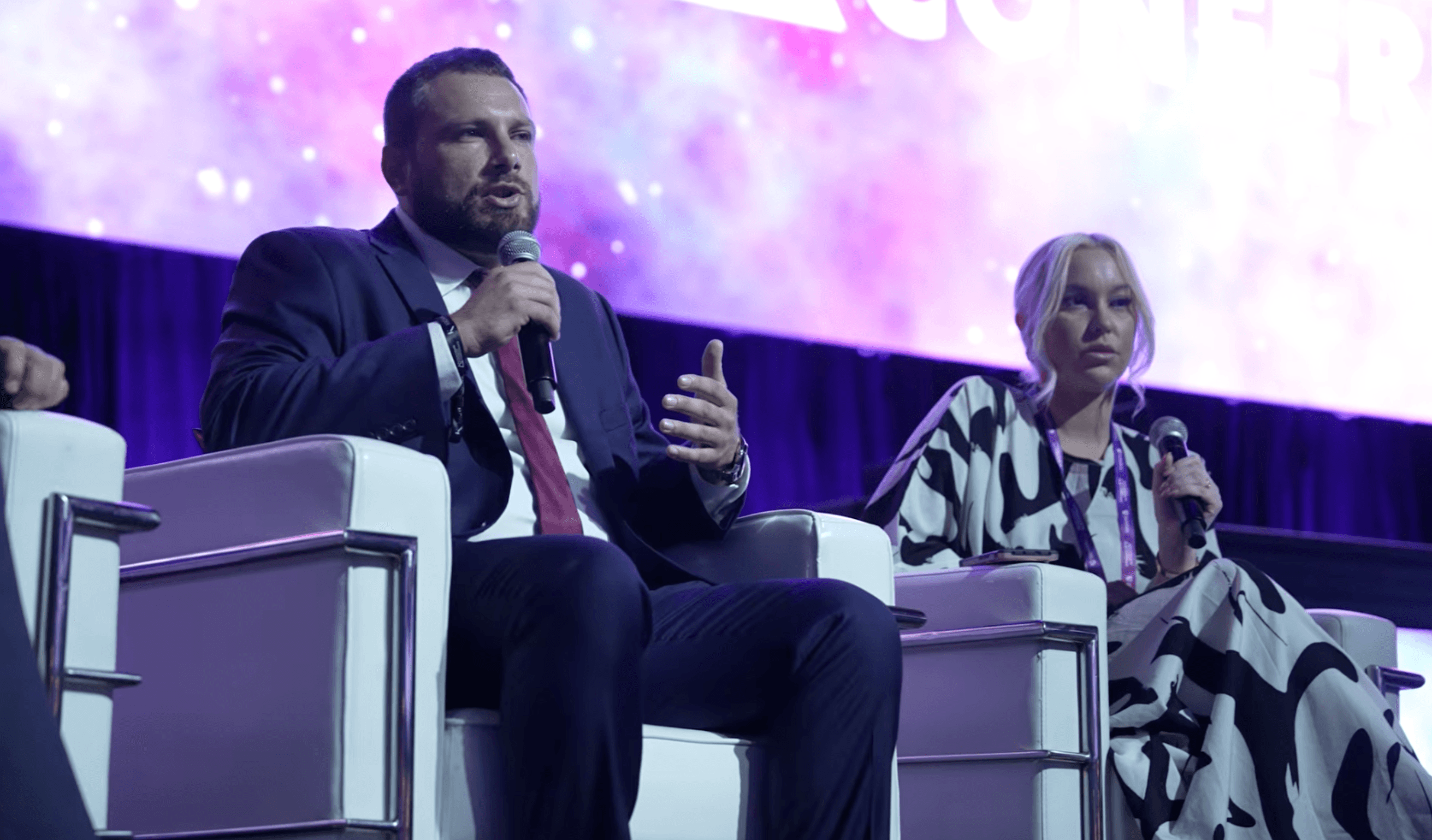
Jerry Lagace, COO of Krown Technologies Inc., has been featured in TheStreet discussing one of the most important security questions facing digital assets today: what happens when keys exposed today can be attacked by quantum systems tomorrow?
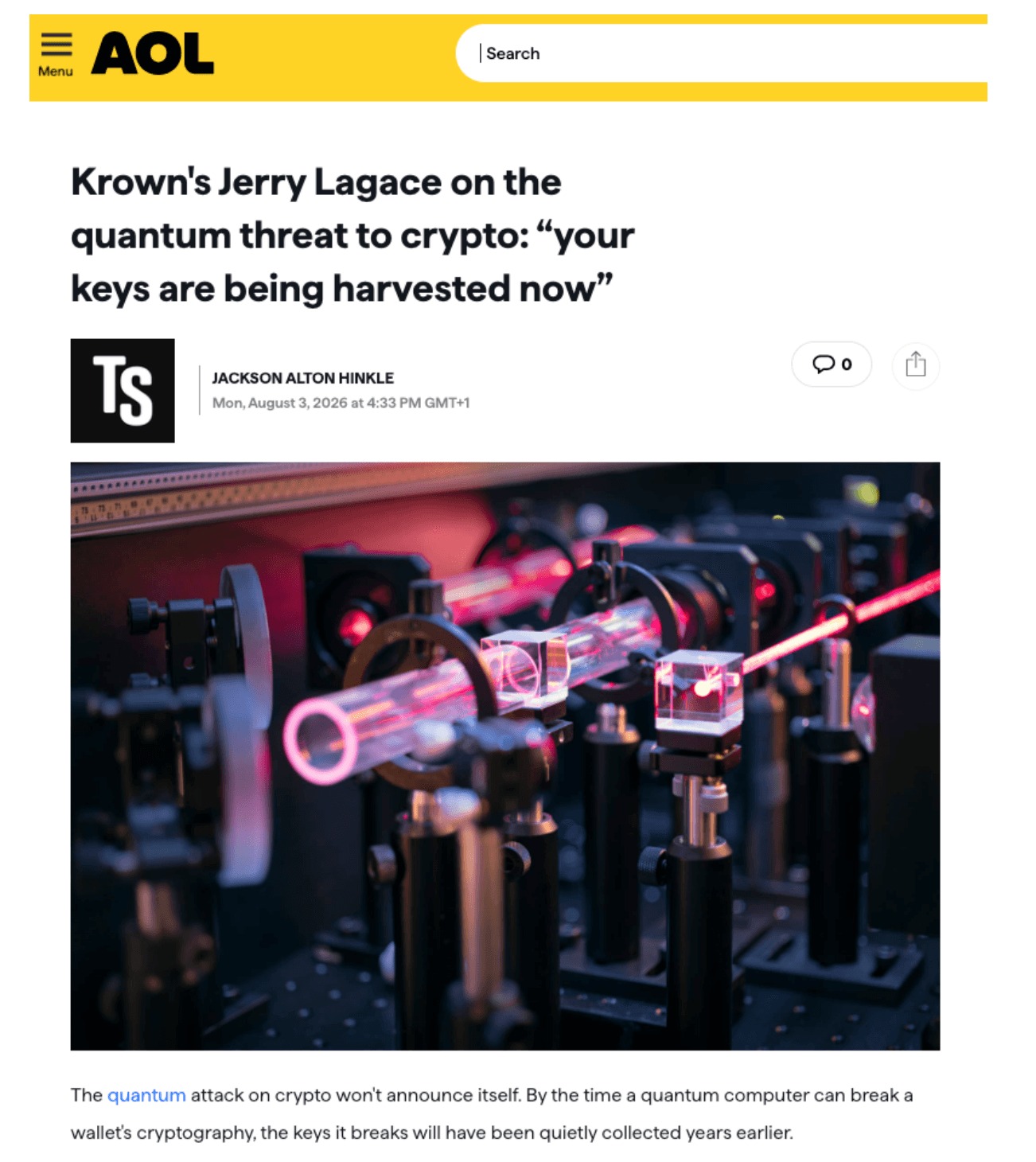
The article, now also picked up by Yahoo Finance, AOL and CryptoPanic, focuses on the idea of “harvest now, decrypt later.”
That matters because the attack does not need to happen today for the risk to begin today.
As Jerry explained:
“Right now all your data is being harvested. Public keys are being saved and put aside by whatever nefarious actors, and they're getting prepared for when the quantum computer comes available. So it's a risk right now.”
That line gets to the heart of the issue.
The industry’s biggest mistake may not be ignoring quantum computing altogether. It may be assuming that quantum risk only starts once a cryptographically relevant quantum computer is available.
In reality, public data, exposed keys and blockchain records can be collected now, stored and targeted later when the technology catches up.
For long-lived digital assets, that changes the security conversation completely.
What “Harvest Now, Decrypt Later” Means
Most people think about a cyberattack as something that happens in a single moment.
A system is breached. A wallet is compromised. A key is stolen. A vulnerability is exploited.
But quantum risk can work differently.
The “harvest now, decrypt later” model describes a threat where attackers collect encrypted data, public keys or exposed cryptographic information today, then hold it until future technology gives them the ability to break or exploit it.
That is what makes the risk uncomfortable.
The damage may not happen immediately, but the exposure can begin long before the final attack is possible.
For blockchain, this is especially important because public ledgers are designed to be permanent. Transaction histories, wallet activity, public keys and ownership records may remain visible for years. If those records are connected to value that continues to exist over a long time horizon, the future risk becomes part of today’s security planning.
As Jerry put it in TheStreet:
“We use this term a lot: harvest now, decrypt later.”
That phrase should matter to anyone thinking seriously about digital asset security.
The Problem With “We’ll Deal With It Later”
One of the most important points Jerry raises is not technical. It is behavioural.
The risk is not only that quantum computers may eventually challenge existing cryptographic systems. The risk is that the industry waits too long to prepare.
As Jerry said:
“People think that it's too far away. People are taking their time and they're like, we'll get to it when we get to it.”
That attitude is exactly what Krown Network is working against.
Crypto security cannot only be designed for the threats that are already visible today. It also needs to account for the value, records and ownership histories that may need to remain protected for years, or even decades.
This is especially true as digital assets move into more serious use cases: wallet infrastructure, real-world assets, tokenized securities, institutional platforms, compliant transfers, provenance records and long-term ownership histories.
If the value is long-term, the security model needs to be long-term too.
Why Wallet-Level Security Matters
TheStreet article also highlights Qastle Wallet, Krown’s quantum-secured hot wallet, and the role it plays in Krown’s wider security thesis.
That matters because most users experience blockchain through the wallet layer first.
The wallet is where users access assets, sign transactions, connect to applications, manage keys, interact with markets and engage with Web3 infrastructure. If the wallet layer is weak, the user’s entire experience becomes harder to trust.
That is why Krown has consistently focused on wallet-level protection as part of the broader quantum security conversation.
A blockchain can be powerful, but if users cannot safely access it, move assets or protect signing activity, the infrastructure is incomplete.
Qastle Wallet is being built around the idea that security cannot be treated as something users figure out later. It needs to be part of the experience from the start.
Why This Matters for Krown Network
For Krown Network, Jerry’s comments in TheStreet speak directly to the wider mission.
Krown Network is being built as quantum-secured Layer 1 infrastructure for digital assets, decentralized applications, wallet security, decentralized markets, real-world asset tokenization and long-term ownership records.
That matters because blockchain records can outlive the market cycle that created them.
A digital asset may be held for years. A real-world asset record may need to remain trustworthy for decades. Ownership histories, provenance records, compliance logic and transfer activity may need to survive changes in technology, regulation and security risk.
That is why quantum-secured infrastructure is not only a future-looking concept. It is a practical foundation for systems being built today.
As Jerry said:
“Everything we're doing is we're trying to stay proactive rather than reactive.”
That proactive approach is central to Krown.
The goal is not to wait until quantum risk becomes urgent, then scramble to retrofit security across wallets, applications and asset records. The goal is to build infrastructure with future threats in mind from the foundation up.
From Buzzword to Real Security Conversation
Jerry also notes that quantum security has moved quickly from a niche topic to something the wider industry is starting to discuss.
“In the last six months, quantum's a buzzword for everybody. But it's buzzing enough where it's getting a lot of attention, and people are actually starting to look into it.”
That attention is useful, but only if it leads to serious preparation.
The quantum security conversation cannot stop at headlines. It needs to move into wallet design, cryptographic architecture, key protection, blockchain infrastructure, standards, validation and real-world deployment.
That is where Krown’s work with Quantum eMotion becomes especially relevant.
Quantum eMotion developed its technology before quantum security became a popular talking point, and Krown has worked to bring that technology into practical blockchain and DeFi applications through Qastle Wallet and the wider Krown ecosystem.
The result is a security conversation that is not just theoretical. It is connected to products, infrastructure and real user access.
The Risk Starts Before the Break
The most important idea in Jerry’s TheStreet interview is simple:
The quantum threat does not begin the day a quantum computer can break existing cryptography.
It begins when valuable data is exposed, collected and stored for future attack.
That is why the timeline debate can be misleading. Whether cryptographically relevant quantum systems arrive in three years, ten years or later, the records being exposed today may still matter when that moment comes.
For short-lived data, that may be less concerning.
For long-lived value, it is a serious problem.
Digital assets, tokenized real-world assets, custody records, ownership histories and institutional blockchain applications are not always short-term systems. Many are intended to preserve value, proof and trust over long periods of time.
That is why Krown continues to focus on quantum-secured infrastructure at the wallet, blockchain and real-world asset level.
Proactive, Not Reactive
TheStreet article is important because it brings a practical security issue into a wider public conversation.
Quantum risk is often framed as something distant, abstract or academic. Jerry’s point is more immediate: the preparation window is already open, because the data attackers may want later can be collected now.
For Krown, that reinforces the core thesis.
The next phase of blockchain security will need more than speed, scale or short-term convenience. It will need secure access, stronger key protection, trusted infrastructure, long-term records and systems designed to protect value as technology evolves.
Source and Related Links
Read the full article in TheStreet:
Krown Network:
Qastle Wallet:
Quantum eMotion:

Sign up to the Krown Mailing List
Secure your insider access to demos, builds and betas. Join us.